
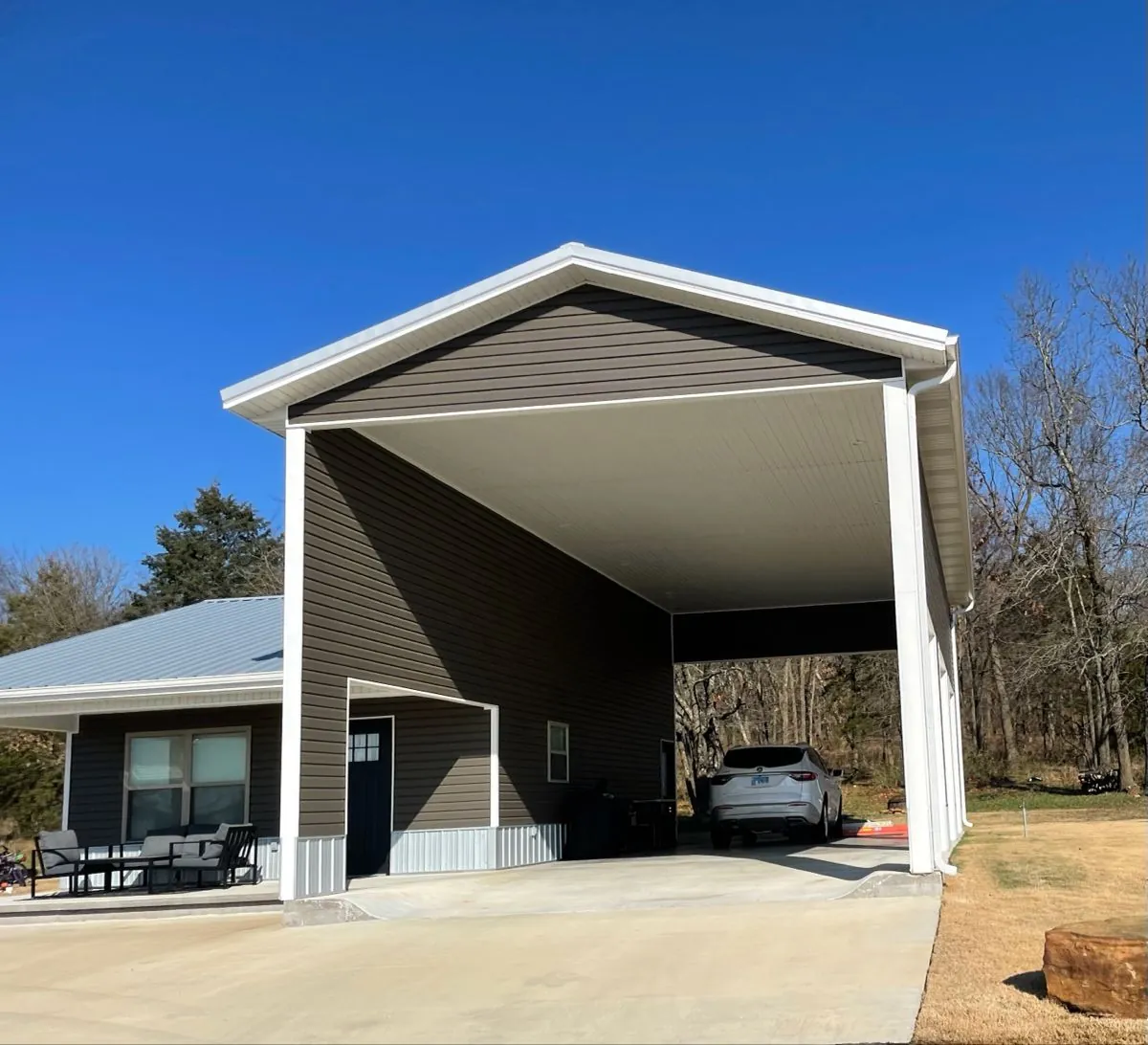
High-Clearance RV Cover
- 12-gauge extra-strength frame
- Boxed-eave roof
- Extended side panels

Most RVs sit parked eleven months of the year, and the sun does more damage in that time than the road does. A steel cover stops it.

Sun chalks gelcoat, dries out roof sealant, and cracks tire sidewalls. A cover with enough height and width keeps all of that in the shade. We size each one for what you own: Class A coaches, fifth wheels, rooftop air conditioners, and the extra width that slide-outs and awnings need.
Most customers ask us to close in the back wall and one side. That blocks the weather from the worst direction without turning the cover into an enclosed building, which can bring different permit requirements. Sized right, it will outlast more than one roof reseal and cost less.
Leg height set for your coach, including the rooftop air unit, with room to spare.
Measured so you can open them without pulling the RV out first.
Length and clearance for the hitch overhang, not just the box.
The most common add-on. Blocks wind and rain from the weather side.
Keep it open to stay a cover, or enclose it fully if your site allows.
Taller structures catch more wind, so anchoring is specified for the height.
Two starting points we quote often. Every dimension, door, and finish changes to fit your site.
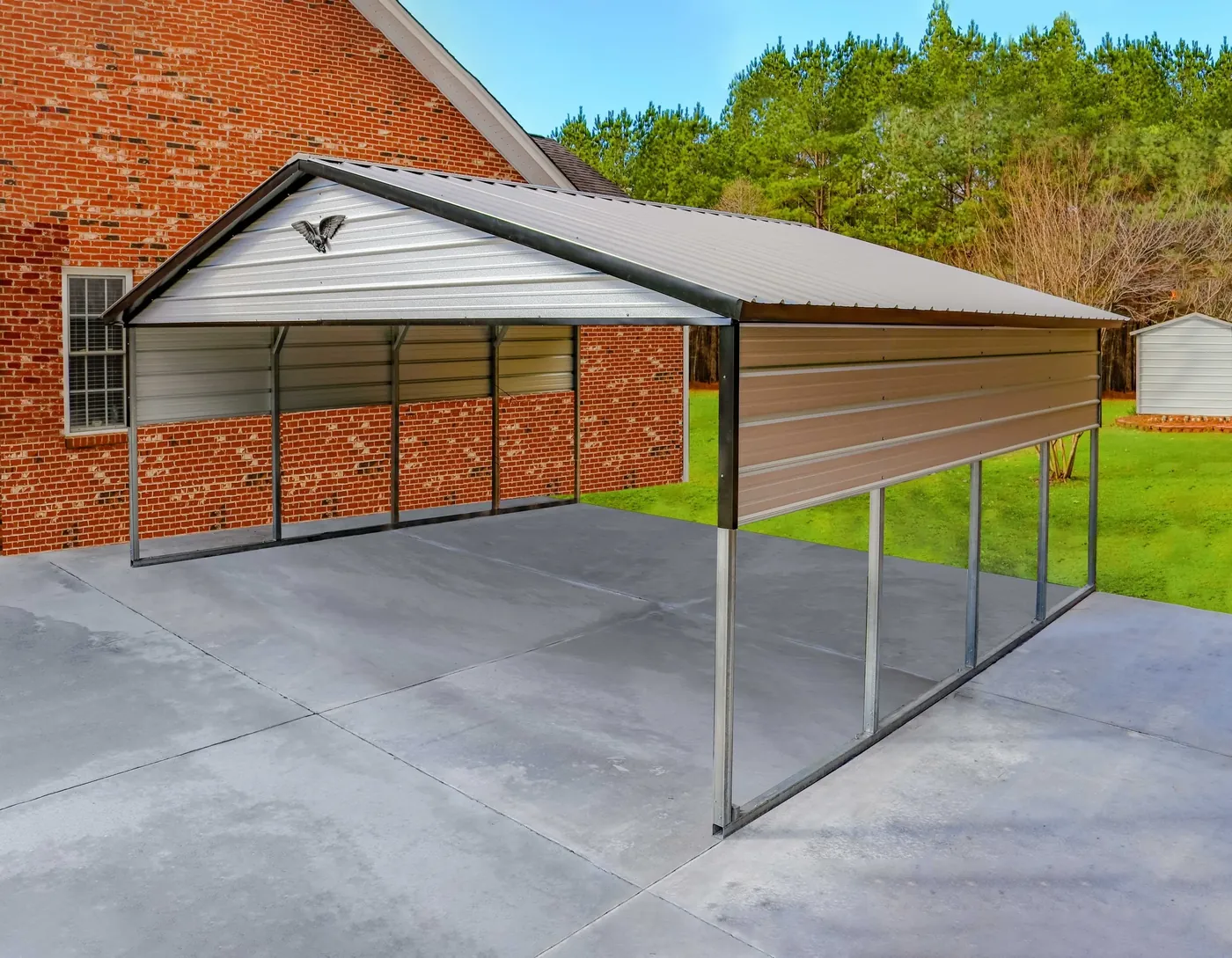


Tall enough to clear the highest point of the RV, usually the rooftop air unit, with working room above it. Tell us the make and model and we'll size it.
Tell us where you want it and we'll look at the site. Some of our covers stand alone and some sit beside a home or shop.
It can. An enclosed building is often treated differently than an open cover. Closing the back wall and one side is popular because it keeps the structure a cover.
More answers on our FAQ page, or call (501) 258-5935.
Tell us what you're building and where it's going. Estimates are free, with no obligation and no deposit.
