
RV Covers
- Carports
- RV Cover
- Garages
- Shops
- Barndomilliums
- Commercial section
Extra-Tall RV Covers in Arkansas Custom Steel Shelter Built to Your Rig
Metal Dreams builds extra-height steel RV covers for owners across Arkansas, engineered around the actual dimensions of what you’re parking rather than a standard size that almost fits. All of these are measured the same: tallest point, widest point, slides and awnays out, and then working clearance on top of that. Fabricated from American sourced coils and installed by our own crews out of Jacksonville, we stand behind the panels with a 40 years finish warranty. If you’ve wanted to get your rig out of the sun for the past three summers, this page should tell you what it takes.
What an RV Cover Is and What It Isn’t
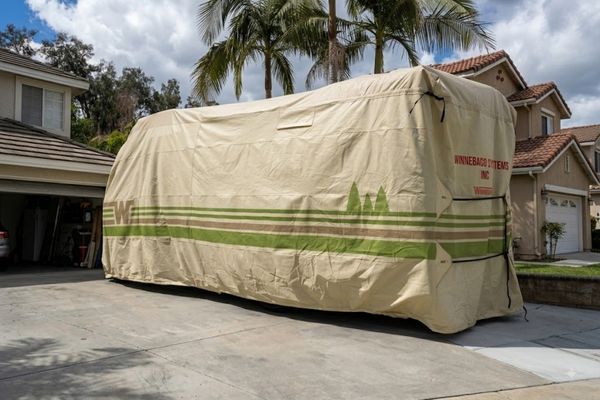
An RV cover is made of permanent open frame steel: galvanized tube frame, coated steel roof panels, anchored to concrete, gravel or compacted soil. The most distinctive characteristic is altitude. While the average residential carport is about 7-8 feet tall at the leg, an RV cover will be about 12-16 feet or more, since that is the height that an RV with the rooftop air conditioner will need to drive under. It’s not a fabric shelter or a portable canopy or a fitted vinyl cover that you strap over the rig each fall. In Arkansas, those that degrade themselves bask in the sun, retain moisture against the surfaces they serve, and need to be manipulated anytime the vehicle is in use. A steel cover goes up once and asks nothing of you afterward. It’s also not a garage. Full enclosure means walls, doors, and a different permitting conversation, at meaningfully higher cost. Most owners don’t need it.
How Uncovered Storage Damages an RV
When a recreational vehicle is sitting still in the sun, the damage is worse than when it is being driven, and it’s important to understand how the damage is done, as this is why shade is so effective. All polymers on the rig are hit simultaneously by the destructive ultraviolet radiation. The fiberglass gelcoat can oxidize and chalk, which causes loss of shine to the sidewalls and provides a surface to trap dirt. Water intrusion starts around sealant beds around vents, skylights, and the front cap, and roof membranes dry out and shrink, pulling away from these sealant beds. Decals crack and lift. Window and door gaskets harden and lose the ability to seal. Tire sidewalls check out for UV and start losing their way starting on the outside of the tire – often on tires with full tread and proper pressure. Arkansas throws in moisture to take advantage of any seal that leaks, spring hail to dent aluminum and crack vent covers and tree debris to bake on the roof. There’s none of it that tells you every month. Four years later it appears as a reseal quote.
Measuring for Clearance the Decision You Can't Undo
The one thing that can’t be changed once it’s produced is height, so we deal with this specification in detail before anything is ordered. Read the measurement from the top of the rig (not the roofline). Shrouds on the air conditioner, satellite domes, antennas and fan covers are all actual inches. Then add approach clearance you want margin for suspension travel over the lip of the entry and for whoever backs it in on a dark evening. Width must allow for extended slide-outs if the rig is to be used under the cover, and for awnings if they will be used under the cover. So does the access to the roof: if the headroom is too small, owners can’t easily access the sealant to inspect it, and they simply don’t and that’s how small leaks become expensive. Tell us what the make, model and length is. These numbers will be run with you.
Engineering a Tall Structure for Arkansas Wind
The tall cover is not a solution to increase the legs of a carport, and the difference is in the structure. A 14 or 16′ roof creates a lot of surface area for wind loading to occur at the highest point, and the uplift forces that occur on the roof during a summer thunderstorm are much more than a low roof is exposed to.
This is solved in three ways: framing gauge, post spacing and anchoring. We specify all three for the site rather than the catalog, and certified anchoring is available where local wind ratings apply. Ground conditions factor in directly when an anchor that holds firmly in compacted soil behaves differently in soft fill or in Arkansas clay after a week of rain. This is why we ask you what your ground is before we quote and not after the crew arrives.
Concrete, Gravel, or Bare Ground and Why We Pour Our Own
Once a fifth wheel is loaded, it applies a lot of weight to a few points and it stays there for months. When on soft ground, the leveling jacks sink, the frame is not in true, and the tires develop flat spots because of constantly being loaded in the same position. Gravel is a satisfactory minimum and provides good drainage. Concrete is preferable because it distributes load, offers a level surface for jacks, protects the underside from moisture and vegetation and offers a more secure anchorage than we have to offer. This is where Metal Dreams stands out from the majority of metal building companies. We’re the steel part of Planit Dirt, James’s concrete company that he has been operating out of Jacksonville for more than 30 years. Our original trade here is slabs and pads and not one that is set up by a subcontractor. One company pours the pad, and another company constructs the cover, following one time schedule.
Boats, Trailers & Equipment Under One Roof
More clearance is helpful not just for motorhomes. A standard carport is not tall enough for vehicles such as bass boats and pontoons on high trailers, enclosed cargo haulers, horse and stock trailers, dump trailers and cab tractors. For that reason, many of the covers we construct are for two or three locations as opposed to one is the coach, the boat or utility trailer on one side, sometimes a truck on the end. The cost of adding the width to one building is a lot less per square foot than the cost of erecting two separate buildings and it allows for everything to be contained within one building site on your property. If there are a number of things in your yard covered with tarps, mention them all when you call. We will price one building which will serve the lot.
RV Cover Delivery & Installation Across Arkansas
Metal Dreams is a Jacksonville-based company that builds and installs all over the State and has regular crew schedules that travel north to Fayetteville, Springdale, Bentonville, south to Pine Bluff and regular work in Central Arkansas including Conway. Our own crews do the installation – people who specified your building are also the ones setting anchors on the building. Most covers are on their stands in a day or two after the pad or ground is ready, and we will inform you of what that entails well before the truck is scheduled. If concrete is needed first, then that is done in-house and on the same time schedule not coordinated between two companies.
Get Your RV Cover Sized and Quoted
Start with three details: what you’re covering, its length, and roughly where it parks on your property. If you know what the height of the highest point is then fantastic but we can work this out for you based on make and model. You’ll get a written estimate listing clearance, framing gauge, roof style, panel profile, anchoring method, color selections, and a real lead time. No deposit required to receive one: everything itemized, nothing vague.