The weather in Arkansas is not a one-way street. You get an ice storm in January, tornadoes in April, heat indexes over 110 in July, and plenty of moisture in the summer and fall, which feels like air from a warm, wet towel. That’s not background information for anybody who is putting up a metal building in this state. It’s your job description for whatever you are making.
A steel carport, shop, or barndominium in Fayetteville will experience different stresses than the same structure in Pine Bluff. More winter precipitation and ice loading is experienced in the northwest corner of the state. The Delta and south Arkansas experience more summer heat and humidity, which makes an unconditioned metal building a sweat box by May. When installing a metal building in Arkansas, you’ll need to consider all aspects of the process, not just the weather that you can predict.
Let’s take a look at how the climate directly affects metal buildings in this state, and how that influences the way Metal Dreams designs and constructs them.
What Summer Heat Does to a Steel Structure
Steel expands when it heats up. Not a fault in the material. It’s physics, and it happens to all of Arkansas’s metal buildings from about May through September. The issue is whether this building had been designed to allow for that movement, or to resist it.
The surface temperature of steel roof panels under direct sunlight in a hot July afternoon at Conway or Bentonville is much greater than the temperature of the ambient air. If the panels are installed in a manner that does not accommodate thermal movement, the movement must occur in some other direction. It gradually acts on fasteners, tears seams and puts pressure on connections between panels and framing, which only becomes noticeable after several summers.
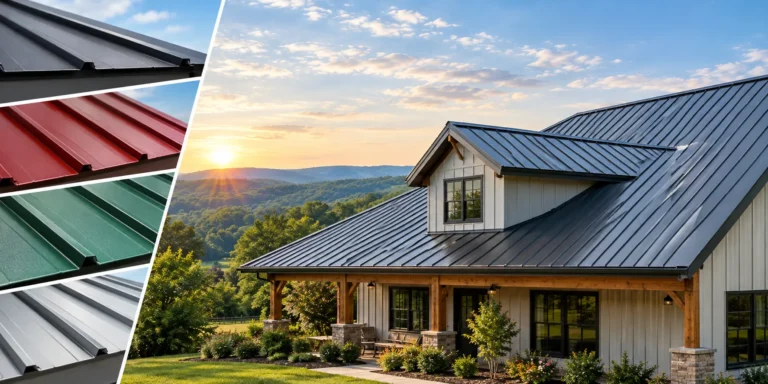
Vertical roof panels with ribs running from the ridge to the eave are more tolerant to thermal expansion than horizontal roof panels because the movement takes place along the length of the panel. Standing seam systems, where panels float on clips rather than being pinned directly to the structure, handle it better still. The right panel profile for an Arkansas building isn’t just about water shedding. It’s about giving the steel room to do what steel does when it gets hot.
The interior heat load is a separate issue. An uninsulated metal building in central or south Arkansas becomes genuinely unusable during summer months, not uncomfortably warm but actually hot enough to damage stored equipment, make livestock miserable, and make any kind of work inside physically taxing within minutes. Metal Dreams addresses this at the design stage, because retrofitting insulation into a finished building is possible and consistently more expensive and disruptive than building it in from the start.
Humidity and What It Does Inside an Uninsulated Building
Arkansas humidity is not just a problem during the summer. It is long and continues from spring to fall, and even winter has enough ambient moisture to cause condensation problems in poorly insulated metal buildings.
Condensation is the process that occurs when warm, moist air comes into contact with a cold metal surface. In uninsulated buildings, it is the underside of the roof panels that drips when the overnight temperature is low enough compared to the moisture in the air. That dripping is a problem for a storage building containing tools, equipment, or materials that can be damaged by moisture. It’s also a comfort and safety concern for a retail store where someone is working.
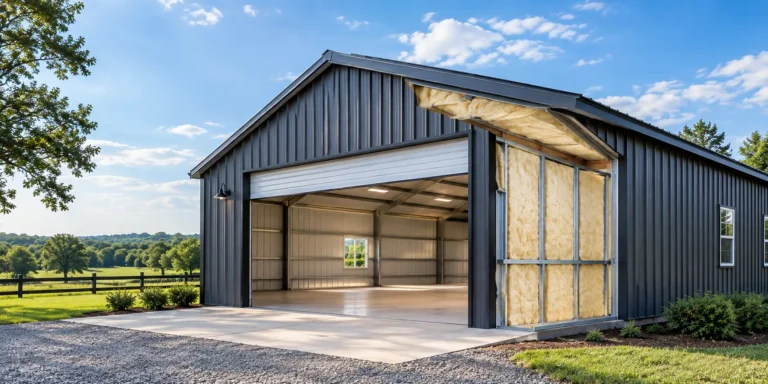
The fix isn’t complicated, but it has to happen during construction. A proper insulation system, whether faced batt between the purlins, spray foam on the underside of the panels, or a combination depending on the application, eliminates the temperature differential that causes condensation. Metal Dreams builds insulation into the spec when the application calls for it, which covers most occupied buildings and any structure storing something moisture-sensitive.
Another effect of humidity over time is that it can cause corrosion on lower quality coatings. A high-quality paint system based on Kynar will resist chalking, surface rusting and fading on panels exposed to Arkansas humidity. Cheaper coatings don’t. Metal Dreams sources American coil and forms panels in-state, which means the coating quality is known and documented rather than arriving from an anonymous overseas supplier where coating weight and consistency aren’t guaranteed.
Spring Storms and Wind Load
Tornado season in Arkansas runs roughly from March through May, with a secondary season in November. The state sits in a corridor of regular severe weather that produces the kind of wind events most building materials weren’t designed to shrug off.
A well-engineered metal building handles wind significantly better than most people expect, and significantly better than wood frame construction of comparable size. Clear span steel frames share the lateral wind forces through the structure to the foundation, rather than depending on sheathing and connections that tend to fail over time when subjected to high winds. Once properly installed, the panels function as a stressed-skin system, rather than simply covering the frame, providing rigidity.
What determines performance in a high-wind event isn’t the steel itself but how the building was engineered for the site. A building in Fayetteville that deals with severe spring storms coming across the Ozarks is engineered to different wind loads than a storage shed in a sheltered rural location further south. Metal Dreams specs framing and anchoring around where the building is actually going, including local wind exposure, rather than applying a single standard to every build across the state.
Anchoring is where this becomes concrete. A building anchored to a properly poured concrete slab with correct anchor bolt placement holds its position in a severe weather event. A building on driven ground anchors, appropriate for lighter structures in some applications, carries different performance characteristics in a direct wind event. Knowing which anchoring system suits the structure and the site is part of the design conversation, not something worked out after the crew arrives.
Ice Storms in Northwest Arkansas
Fayetteville, Springdale, and Bentonville see ice events that the rest of Arkansas largely doesn’t. A single ice storm can deposit enough weight on a roof surface to put real load on the structure, and flat or low-pitched roofs accumulate that load differently than steeper ones.
Ice also finds its way into seams, fastener penetrations, and any opening where water can get before it freezes. A poorly detailed roof, particularly around penetrations and at the eave, gives ice somewhere to work. As it freezes and expands, it opens gaps that become leak points when it thaws. Vertical roof panels with proper ridge and eave detailing shed ice better than horizontal panels, which is why they’re typically the right call in northwest Arkansas regardless of building size.
The practical implication for anyone building in Benton or Washington County is that roof pitch and panel orientation aren’t purely aesthetic decisions. A slightly steeper pitch combined with vertical panels gives ice and snow a path off the roof rather than a place to sit and accumulate.
What This Means for How Metal Dreams Builds
The same steel structure that works in one part of Arkansas doesn’t automatically work in another. That’s why the site conversation comes before the spec conversation on every Metal Dreams project. Where the building is going, what direction the weather typically comes from, what the structure will be used for, and what the local conditions require for insulation and anchoring all feed into a spec that’s built around the actual site rather than a catalog standard.
Metal Dreams fabricates panels in-state from American coil, which shortens lead times and removes the supply chain uncertainty that delayed Arkansas contractors for months during the pandemic. Every build comes with a written estimate, no deposit required to get started.
Tell Metal Dreams what you’re building and where it’s going. The conversation starts there.